Plants selectively recruit microorganisms that support their adaptation to the environment – a new publication
Plants growing on metalliferous or metal-contaminated soils have evolved distinct adaptive strategies, including metal hyperaccumulation (i.e., the accumulation of metals in large amounts) in aboveground tissues or the restriction of metal uptake (exclusion). An increasing body of research indicates that microorganisms associated with plants play an important role in these processes.
An article published in The ISME Journal presents the results of a collaboration between the W. Szafer Institute of Botany of the Polish Academy of Sciences (Dr Agnieszka Domka), the Małopolska Centre of Biotechnology of Jagiellonian University (a team led by Dr Piotr Rozpądek), and the University of Natural Resources and Life Sciences in Vienna (Dr Markus Puschenreiter). In experiments involving two plant species – Odontarrhena chalcidica, a nickel (Ni) hyperaccumulator, and Arabidopsis arenosa, a plant that restricts the uptake of this element – the authors demonstrated that plants actively select the microorganisms with which they interact, and that this selection is closely linked to their adaptive strategy. As a result of this selectivity, the microbiota of the two species differ markedly. Moreover, microorganisms colonizing plants support their host by modulating metal uptake mechanisms, including the regulation of transporter expression.
The results of the study can also be read about on the website of Forum Akademickie (in Polish).
Original article:
Domka A., Gustab M., Jędrzejczyk R., Ważny R., Tognacchini A., Puschenreiter M., Łabaj P., Muszyńska A., Kosowicz W., Jarosz K. et al. 2025. Regulation of plant Ni uptake by soil-borne microorganisms occurs independently of their Ni-solubilizing capabilities. The ISME Journal 19: wraf265. DOI
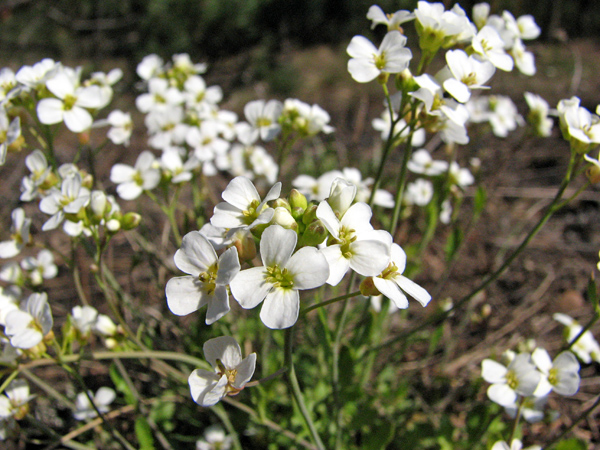
Arabidopsis arenosa – one of the species used in the study.
Photo: Paweł Kapusta
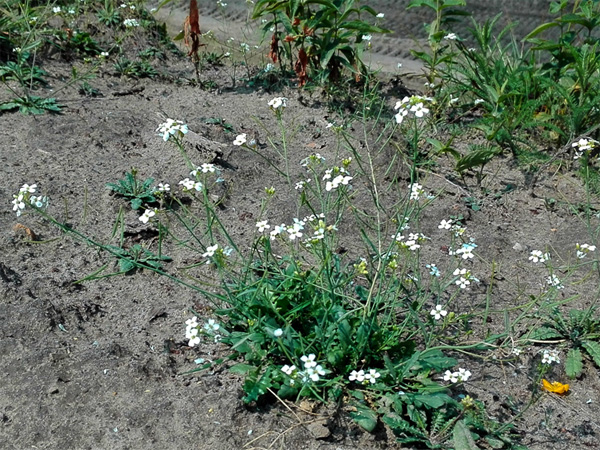
Arabidopsis arenosa on the "Bolesław" heap in the vicinity of Olkusz – the site from which the seeds used in the experiments were collected.
Photo: Rafał Ważny
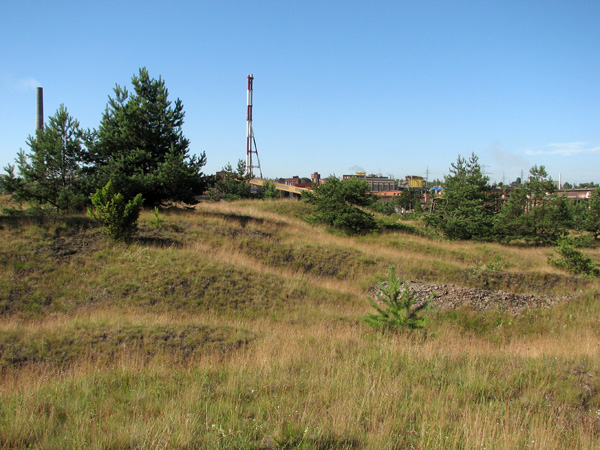
Grasslands on old post-mining waste deposits (metal-rich substrates) in the vicinity of the Mining and Metallurgical Plant "Bolesław", near Olkusz.
Photo: Paweł Kapusta